RV and Trailer Inspection Checklist

Here's everything we look for when inspecting any RV or trailer.

Our inspection checklist outlines the comprehensive process we use to evaluate the condition, safety and functionality of your RV or trailer. Each inspection uses industry-standard methods and specialized tools to identify defects, safety concerns, and signs of future failure.
NOTE - items listed in bold are unique only to our inspection process.
Most inspectors will not go the extra mile for you but we will.
Motorhomes
Includes class A, class B and class C motorhomes. Diesel or gas engines. Up to 40 feet in length.
Verification/VIN Check

Visual inspection of the VIN number on multiple areas of the RV to make sure they all match. We check actual mileage on the dash.

We verify the number of keys that come with the RV. We test the keys to make sure they open the correct doors. We also search for any original manufacturer documents or owners manual.

Inspect Exterior
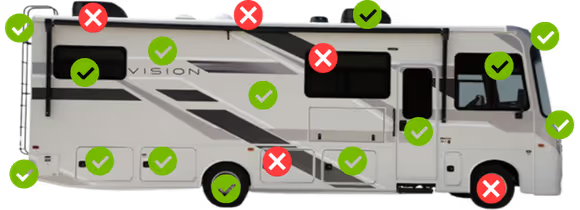
  • We scour the exterior of the RV in search of major imperfections such as deep scratches, dents, rust, cracked windows/windshields and overall body quality.

  • We check side mirrors to see if they are securely intact.

  • Roof surface, sealants, penetrations, vents, skylights, antennas, and rooftop accessories are inspected for damage, deterioration, improper repairs, and signs of active or past leaks.

  • Sidewalls and endcaps are examined for cracks, delamination, stress fractures, fading, body damage, and sealant integrity.

  • Slide-outs are inspected for structural integrity, roof condition, seals, slide mechanisms, alignment, and proper operation.

  • We use a 7-pin connector tester to verify proper tow hitch electrical function, ensuring trailer lights, brakes, and safety systems operate correctly before towing.

  • Windows, doors, compartments, and exterior hatches are checked for operation, sealing, latches, and water intrusion concerns.

  • Awnings (patio and slide-topper, if equipped) are deployed and inspected for fabric condition, arms, motors, and mounting points.
Inspect Interior
  • Walls, ceilings, floors, cabinets, and trim are inspected for stains, soft spots, odors, or signs of water intrusion.
  • Furniture, seating, beds, and slide-out interiors are inspected for damage, function, and installation quality.
  • Windows, blinds, screens, and interior doors are checked for proper operation.
  • All televisions tested for audio and video quality as well as remote controls.
  • We also check for cigar and cigarette smoke odors.
Chassis, Frame and Undercarriage
  • Frame rails, crossmembers, welds, and mounting points are visually inspected for damage, corrosion, or modifications.
  • Undercarriage components are examined for impact damage, leaks, loose fasteners, and improper routing of lines or wiring.
  • Hitch receiver, towing equipment, and safety chain mounts are inspected for integrity and rating compliance.
  • Leveling jacks or stabilizers are inspected for leaks, operation, mounting security, and structural condition.
Tires, Wheels, and Suspension
  • Tire brand, size, DOT date codes, tread depth, sidewall condition, and inflation are evaluated.
  • Suspension components including springs, airbags, shocks, bushings, and mounting hardware are visually inspected.
  • Steering linkage and visible drivetrain components are checked for excessive play, leaks, or abnormal wear.
Engine Compartment
  • Engine bay is inspected for fluid leaks, belt condition, hose integrity, corrosion, and evidence of overheating.
  • Engine oil, coolant, power steering, brake fluid, and other accessible fluids are checked where applicable.
  • Air intake, filters, and visible emissions components are visually assessed.
  • Battery condition, voltage, mounting, terminals, and cabling are inspected.
Generator System
  • Generator is inspected for mounting security, fluid leaks, exhaust condition, and signs of improper repairs.
  • Generator is started and run under load to verify proper operation, output, and stability.
  • Electrical connections, controls, and automatic transfer functionality are evaluated.
Electrical System (12V & 120V)
  • Shore power connection, cord, transfer switch, and main breaker panel are inspected.
  • 120V outlets are tested for proper polarity and grounding.
  • 12V DC system including house batteries, converter/inverter operation, fuses, and wiring is evaluated.
  • We use a true RMS multimeter rated up to 1,000 amps, allowing us to accurately test high-load RV electrical systems that exceed the limits of basic meters commonly used by most inspectors.
  • Interior and exterior lighting, switches, and control panels are tested.
  • Solar systems, inverters, and auxiliary electrical equipment (if equipped) are inspected for function and installation quality.
Plumbing System
  • Fresh water tank, water pump, and distribution lines are inspected for leaks and proper operation.
  • City water connection and pressure regulator function are evaluated.
  • Water heater (gas and/or electric) is inspected and tested where conditions allow.
  • Faucets, sinks, shower, toilet, and exterior shower are tested for operation and drainage.
  • Waste systems including gray and black tanks, valves, venting, and termination fittings are inspected.
Propane (LP) System
  • Propane tanks or cylinders are inspected for age, mounting, regulators, and visible damage.
  • LP lines and fittings are visually inspected for condition and routing.
  • Appliances supplied by propane are tested for ignition and operation where possible.
  • Leak detection is performed using non-invasive methods.
HVAC Systems
  • Roof air conditioning units are operated and temperature differentials are measured to verify performance.
  • Furnace operation is tested, including ignition, airflow, and cycling.
  • We use an R-134A refrigerant gauge to verify proper air conditioning system pressures, rather than relying solely on air temperature output like our competitors.
  • Thermostats and control systems are checked for proper response.
Appliances
  • Refrigerator is tested in applicable modes (electric and/or propane) and cooling performance is evaluated.
  • Microwave, cooktop, oven, washer/dryer (if equipped), and other built-in appliances are tested.
  • Appliance installations are inspected for ventilation, secure mounting, and proper operation.
Safety Systems
  • Smoke detectors, carbon monoxide detectors, propane detectors, and fire extinguishers are checked for presence, condition and age.
  • Emergency exits are identified and inspected for proper operation.
  • Seatbelts and driver safety equipment are inspected where applicable.
Operational Systems
  • Entry steps, slide-out controls, leveling systems, and other powered components are tested.
  • Dash controls, gauges, warning indicators, and driver interface systems are evaluated.
  • Backup cameras, monitoring systems, and integrated electronics are tested where equipped.
Moisture Intrusion Evaluation
  • A non-invasive moisture meter is used throughout the coach to identify elevated moisture levels.
  • Areas around roof penetrations, windows, slide-outs, and known leak-prone locations are evaluated.
  • Findings are documented and correlated with visible conditions.
Towables
Includes fifth wheels, travel trailers, popup campers and toy haulers. Up to 40 feet in length.
Verification/VIN Check

Visual inspection of the VIN number on multiple areas of the trailer to make sure they all match.

We verify the number of keys that come with the trailer. We test the keys to make sure they open the correct doors. We also search for any original manufacturer documents or owners manual.

Inspect Exterior
  • We scour the exterior of the trailer in search of major imperfections such as deep scratches, dents, rust, cracked windows/windshields and overall body quality.

  • Roof surface, sealants, penetrations, vents, skylights, antennas, and rooftop accessories are inspected for damage, deterioration, improper repairs, and signs of active or past leaks.

  • Sidewalls and endcaps are examined for cracks, delamination, stress fractures, fading, body damage, and sealant integrity.

  • Slide-outs are inspected for structural integrity, roof condition, seals, slide mechanisms, alignment, and proper operation.

  • Windows, doors, compartments, and exterior hatches are checked for operation, sealing, latches, and water intrusion concerns.

  • Awnings (patio and slide-topper, if equipped) are deployed and inspected for fabric condition, arms, motors, and mounting points.


Inspect Interior
  • Walls, ceilings, floors, cabinets, and trim are inspected for stains, soft spots, odors, or signs of water intrusion.
  • Furniture, seating, beds, and slide-out interiors are inspected for damage, function, and installation quality.
  • Windows, blinds, screens, and interior doors are checked for proper operation.
  • All televisions tested for audio and video quality as well as remote controls.
  • We also check for cigar and cigarette smoke odors.
Chassis, Frame and Undercarriage
  • Frame rails, crossmembers, welds, and mounting points are visually inspected for damage, corrosion, or modifications.
  • Undercarriage components are examined for impact damage, leaks, loose fasteners, and improper routing of lines or wiring.
  • Fifth-wheel pin box or travel trailer coupler is inspected for wear and secure mounting.
  • Leveling jacks or stabilizers are inspected for leaks, operation, mounting security, and structural condition.
Tires, Wheels, and Suspension
  • Tire brand, size, DOT date codes, tread depth, sidewall condition, and inflation are evaluated.
  • Wheels and lug hardware are inspected for damage or improper torque indicators.
  • Axles, springs, shackles, equalizers, and suspension hardware are inspected.
  • Signs of axle misalignment or abnormal tire wear are noted.
Hitching and Coupling System
  • Fifth-wheel hitch pin box or travel trailer coupler is inspected for wear, cracks, and secure mounting.
  • We use a 7-pin connector tester to verify proper tow hitch electrical function, ensuring trailer lights, brakes, and safety systems operate correctly before towing.
  • King pin or coupler operation is checked for damage and proper engagement.
  • Safety chains, breakaway switch, and emergency cable routing are inspected.
  • We use a MUTT (Mobile Universal Trailer Tester) to verify that all trailer wiring and electrical connections function properly when connected to a tow vehicle.
  • Weight distribution or sway control components (if equipped) are evaluated.
Axles, Bearings and Braking System
  • Electric drum or disc brake components are visually inspected where accessible.
  • Brake wiring, magnets, and junctions are checked for condition and routing.
  • Wheel bearings are evaluated for signs of overheating, leakage, or improper service.
  • Brake breakaway system is tested for proper operation.
Frame, Crossmembers and Pin Box Area (Fifth Wheels)
  • Frame welds, outriggers, and crossmembers are inspected for cracks or flexing.
  • Pin box mounting structure is closely inspected for stress fractures or deformation.
  • Evidence of frame separation or structural repairs is documented.
Tongue Area (Travel Trailers)
  • A-frame, jack, propane mounting tray, and battery tray are inspected.
  • Front wall and frame junction is evaluated for stress cracking and water intrusion.
Generator System
  • Generator is inspected for mounting security, fluid leaks, exhaust condition, and signs of improper repairs.
  • Generator is started and run under load to verify proper operation, output, and stability.
  • Electrical connections, controls, and automatic transfer functionality are evaluated.
Electrical System (12V & 120V)
  • Shore power connection, cord, transfer switch, and main breaker panel are inspected.
  • 120V outlets are tested for proper polarity and grounding.
  • 12V DC system including house batteries, converter/inverter operation, fuses, and wiring is evaluated.
  • We use a true RMS multimeter rated up to 1,000 amps, allowing us to accurately test high-load RV electrical systems that exceed the limits of basic meters commonly used by most inspectors.
  • Interior and exterior lighting, switches, and control panels are tested.
  • Solar systems, inverters, and auxiliary electrical equipment (if equipped) are inspected for function and installation quality.
Plumbing System
  • Fresh water tank, water pump, and distribution lines are inspected for leaks and proper operation.
  • City water connection and pressure regulator function are evaluated.
  • Water heater (gas and/or electric) is inspected and tested where conditions allow.
  • Faucets, sinks, shower, toilet, and exterior shower are tested for operation and drainage.
  • Waste systems including gray and black tanks, valves, venting, and termination fittings are inspected.
Propane (LP) System
  • Propane tanks or cylinders are inspected for age, mounting, regulators, and visible damage.
  • LP lines and fittings are visually inspected for condition and routing.
  • Appliances supplied by propane are tested for ignition and operation where possible.
  • Leak detection is performed using non-invasive methods.
Braking and Breakaway System
  • Electric braking system is inspected for wiring condition and functionality.
  • Breakaway switch and emergency battery are tested.
  • Brake components are evaluated for signs of overheating or wear.
HVAC Systems
  • Roof air conditioning units are operated and temperature differentials are measured to verify performance.
  • Furnace operation is tested, including ignition, airflow, and cycling.
  • We use an R-134A refrigerant gauge to verify proper air conditioning system pressures, rather than relying solely on air temperature output like our competitors.
  • Thermostats and control systems are checked for proper response.
Appliances
  • Refrigerator is tested in applicable modes (electric and/or propane) and cooling performance is evaluated.
  • Microwave, cooktop, oven, washer/dryer (if equipped), and other built-in appliances are tested.
  • Appliance installations are inspected for ventilation, secure mounting, and proper operation.
Safety Systems
  • Smoke detectors, carbon monoxide detectors, propane detectors, and fire extinguishers are checked for presence, condition and age.
  • Emergency exits are identified and inspected for proper operation.
  • Seatbelts and driver safety equipment are inspected where applicable.
Moisture Intrusion Evaluation
  • A non-invasive moisture meter is used throughout the coach to identify elevated moisture levels.
  • Areas around roof penetrations, windows, slide-outs, and known leak-prone locations are evaluated.
  • Findings are documented and correlated with visible conditions.
Included with Every Inspection
48 hour turn-around time
Up to 300+ inspection points
Over 100 high-quality photos documenting RV condition
Over 15 minute video documenting RV condition
Up to 30 minute phone call from the inspector following the inspection
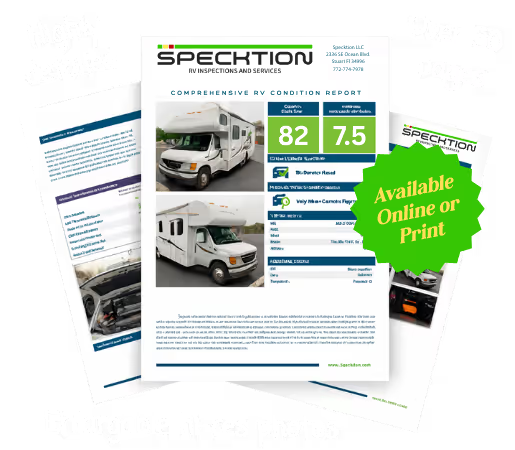
Multiple page, easy to read report
NOT Included with Inspection
Appliance features, model and serial numbers
Other time consuming and useless info
We intentionally exclude information in our reports that does not contribute to understanding the condition, safety, or functionality of the RV. Items such as appliance model numbers, gross vehicle weight ratings, license plate details, tow capacity and similar data are readily available from manufacturer documentation or registration records and offer no diagnostic or decision-making value to the buyer.

By eliminating this nonessential information, our reports remain focused, readable, and centered on what actually matters — identifying defects, safety concerns, and potential future issues that can affect ownership cost and reliability.

Frequently Asked Questions

Do you inspect Teslas, hybrids and other electric vehicles?

Yes we do. It is for the most part the same as our standard inspection except of course there is no engine inspection.

You can get more info on our electric vehicle inspection page.

Do you do a compression check?

We do not do a compresion check due to the liability of damaging the seller's car. Plus, most sellers will not approve of us taking parts off of their vehicle.

How long does an inspection take?

For most vehicles, our inspections take just about an hour. Sometimes longer if many issues are found.

Do you guarantee the inspection?

We can not guarantee the inspection report. We make every possible attempt to locate flaws and mechanical failures on a vehicle. Our inspectors can only report on what they observed at the time of inspection.

They do not take parts apart nor do they do a full mechanical examination, therefore can not be held liable if something goes wrong later.

Please bear in mind that our trained inspectors know what to look for when inspecting used vehicles, but if the problem doesn't occur during the inspection or test drive, than they can not report on it. It's sad to say, but some sellers can temporarily hide problems with a vehicle long enough to get it sold.

The good news is, most mechanical or electrical problems don't usually get past one of our inspections because of the advanced OBD scan performed on the vehicle which is considered to be dealership level scanning. Of course, it only works if the seller allows us to do a scan.

If a full inspection and test drive fail to indicate any problems on the vehicle and problems occur later, these were more than likely hidden internal problems which go way beyond the scope of this mostly visual inspection.

Do you check the title of the vehicle?

We do not check the title of the vehicle in any way. We suggest you should take that up with the seller directly.

Can I call during the inspection?

Our inspectors are on a tight schedule and need to be efficient at managing their time. Handling incoming phone calls from customers would slow down our inspectors and cause delays. Remember, we're already taking an hour away from the seller, so talking on the phone would only prolong that time and increase the possibility of them stopping the inspection early.

However, in our Full Specktion package the inspector will call you immediately after the inspection to give you a rundown of what they found.

How long does it take to get the inspection report?

After inspection of the vehicle, the inspector will upload the information to the company where a technician will review it. This process can take anywhere from 3 to 5 hours after the initial inspection. After the review is complete, you will receive your report via email.

For inspections conducted after 5 PM, you will receive your inspection report via email the following morning by 10AM.  Reports are sent out 7 days a week.

When are you available to do an inspection?

We are available to do inspections 7 days a week from 8:30AM to 7:30PM or dusk (whichever comes first). We are closed only Thanksgiving, Christmas Eve and Christmas day. We do not inspect at night or in the rain.

OR CALL 772-774-7978
Get Your RV Inspection Today!
Call Us At
772-774-7978
SCHEDULE ONLINE
SERVING SOUTHEAST FLORIDA
LICENSED AND INSURED
Customer Service Hours:
Monday - Friday 8:30 AM to 7:30 PM
Saturday 10 AM to 4 PM Eastern Time
Copyright © 2026 Specktion - All Rights Reserved